R&D-Driven Solutions
We assess material structures and pouch formats according to product contents, storage, display, and cost requirements.
Feng Zhan helps food, consumer-goods, medical, electronics, pet-care, and branded-product customers turn packaging requirements into production-ready specifications.
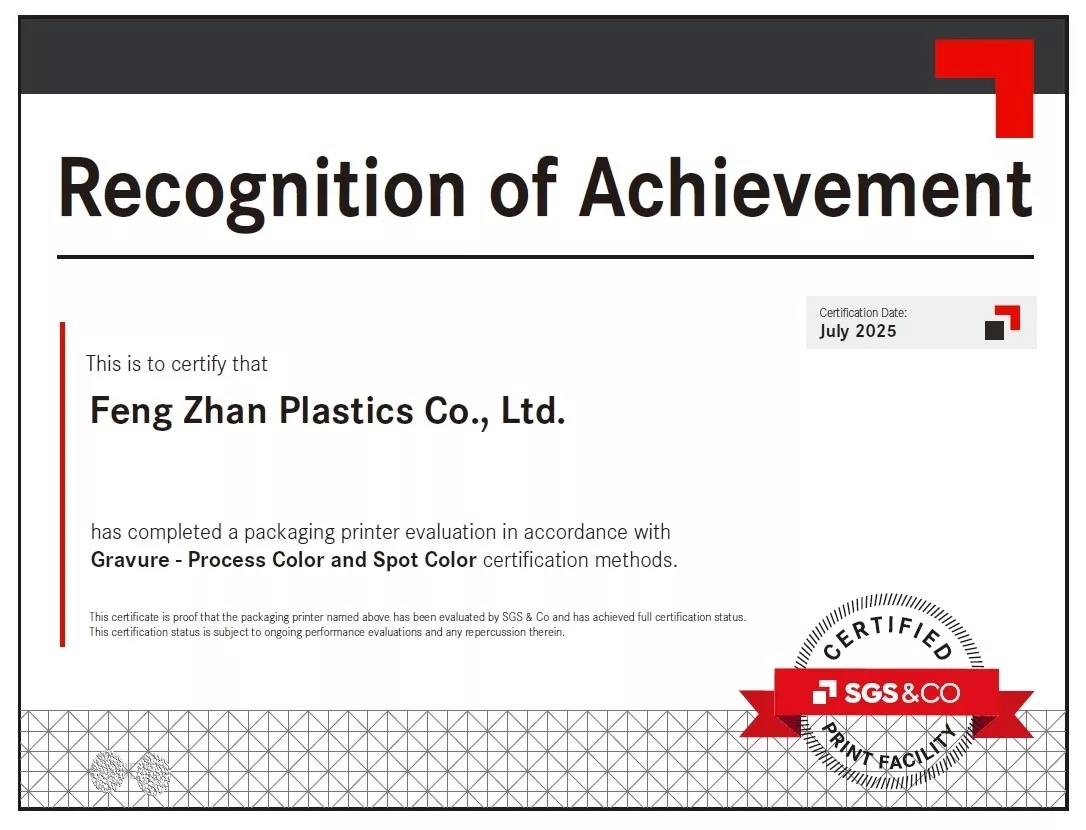
Our philosophy, quality policy, company history, and key updates are presented together so visitors can understand Feng Zhan in one place.
Feng Zhan combines R&D, service, production expertise, and quality control to deliver food-grade flexible packaging and custom gravure printing.
We assess material structures and pouch formats according to product contents, storage, display, and cost requirements.
Clear production records carry each project from inquiry and artwork approval through cylinder making and shipment.
ISO 9001 guides our production, inspection, and continuous-improvement records.
We invest in high-speed printing and RTO/VOC management while evaluating lower-impact materials.
Beginning with pouch converting, Feng Zhan has built flexible-packaging experience across multiple industries.
Printing, lamination, slitting, pouch converting, and shipment management were integrated at one production site.
Established a standardized quality-management system.
Improved print-registration consistency and production efficiency for printed packaging.
An RTO system was installed to treat VOC emissions from production.
Data-driven color management aligns production with international brand-printing standards.
Practical guidance on packaging applications, material selection, finishing, and quality control.
Select materials according to moisture, light, temperature, puncture, and heat-seal requirements.
Pouch format, finishing, dimensions, materials, printing, and quantity all affect the quotation.
Evaluate low-temperature performance for frozen foods, heat resistance for boil-in-bag uses, and load strength for pet food.
Production checks cover color samples, print registration, dimensions, seals, appearance, and quantity.
From specifications and artwork approval through printing, lamination, and OQC, every production stage is clearly traceable.
First confirm specifications, quantity, unit price, and lead time.
Complete the purchase order, artwork approval, and layout proofing together.
Prepare the engraved cylinders, approve the first article, and ready the required materials and components.
Confirm color samples, print registration, laminate bond strength, and curing conditions.
Recheck seals, dimensions, appearance, functionality, and quantity.
Start with the industry and product contents to narrow down suitable pouch formats for food, medical, electronics, pet-care, and agricultural applications.
Packaging for frozen meat, snacks, baked goods, retort foods, and grains.
Outer packaging for cleaning products, stationery, household hardware, cosmetics, and apparel.
Packaging for sterilization pouches, masks, tablets, hydrocolloid dressings, and adhesive bandages.
Aluminum-barrier, easy-open, and moisture-barrier pouches for packing electronic components.
Outer bags for cat litter, pet food, hay, and other pet supplies.
Anti-fog produce bags and agricultural packs for portioning and retail display.
As industries work toward net-zero goals, thoughtfully designed plastic packaging can support material reduction, recovery, and circular use.
Center-seal pouches suit snacks, grains, and automated packaging lines while preserving the front artwork and consistent seals.
Designed for dry noodles, pet food, and larger fills, with load strength and easy carrying.
Rollstock reduces storage needs and improves automated packing efficiency; barrier performance can be tailored to the product.
Laminated films can improve oxygen and moisture barriers and help preserve freshness for snacks and confectionery.
Common pouch formats can include tear notches, hang holes, handles, zippers, self-adhesive closures, or tamper-evident seals.
We configure outer, barrier, and sealant layers for moisture, freezing, boiling, light-barrier, or chemical-resistance needs while considering greener packaging and ESG objectives.
Good heat resistance and stiffness make PET a common outer print layer.
Clear and economical for snack-food and retail packaging.
High toughness and puncture resistance for vacuum-packed, frozen, and fresh products.
A natural paper appearance often used for coffee, tea, biscuits, and organic products.
Excellent light and moisture barrier with aroma retention for tea, coffee, and dietary supplements.
Provides a metallic appearance and light barrier at a lower cost than aluminum foil.
Combines a metallic appearance with heat-sealability for food-contact inner layers.
Flexible, leak resistant, and suitable for low temperatures; commonly used as an inner sealant layer.
Good clarity and heat resistance for boil-in-bag and retort packaging.
We evaluate material reduction, lower-emission processes, recycling, and alternative materials to help brands balance performance with ESG goals.
Reduce plastic use through mono-material structures, lighter films, and structural optimization.
Reduce emissions through solvent-free lamination, lower-impact printing practices, and VOC treatment.
We assess PCR/PIR recycled content by application and work to reduce trim waste.
Evaluate the applications and limitations of Bio-PE, PLA, PBAT, and other alternative materials.
GMI color management, gravure printing, lamination, pouch converting, quality control, and VOC treatment support consistent quality, capacity, and emissions reduction.
Apply GMI standards to CMYK, spot colors, proofing, and first-article approval.
Control web tension, registration, doctor-blade performance, and ink viscosity for stable high-speed printing.
Assess low-residual and lower-emission lamination options for the packaging requirements.
Confirm dimensions, seals, appearance, and functionality through OQC before shipment.
Supports high-volume printed packaging with stronger registration and lead-time control.
Use GMI standards to minimize color variation and maintain consistent brand colors.
Assess lamination options for low residual solvent, lower emissions, and production efficiency.
Use VOC treatment equipment to reduce production emissions.
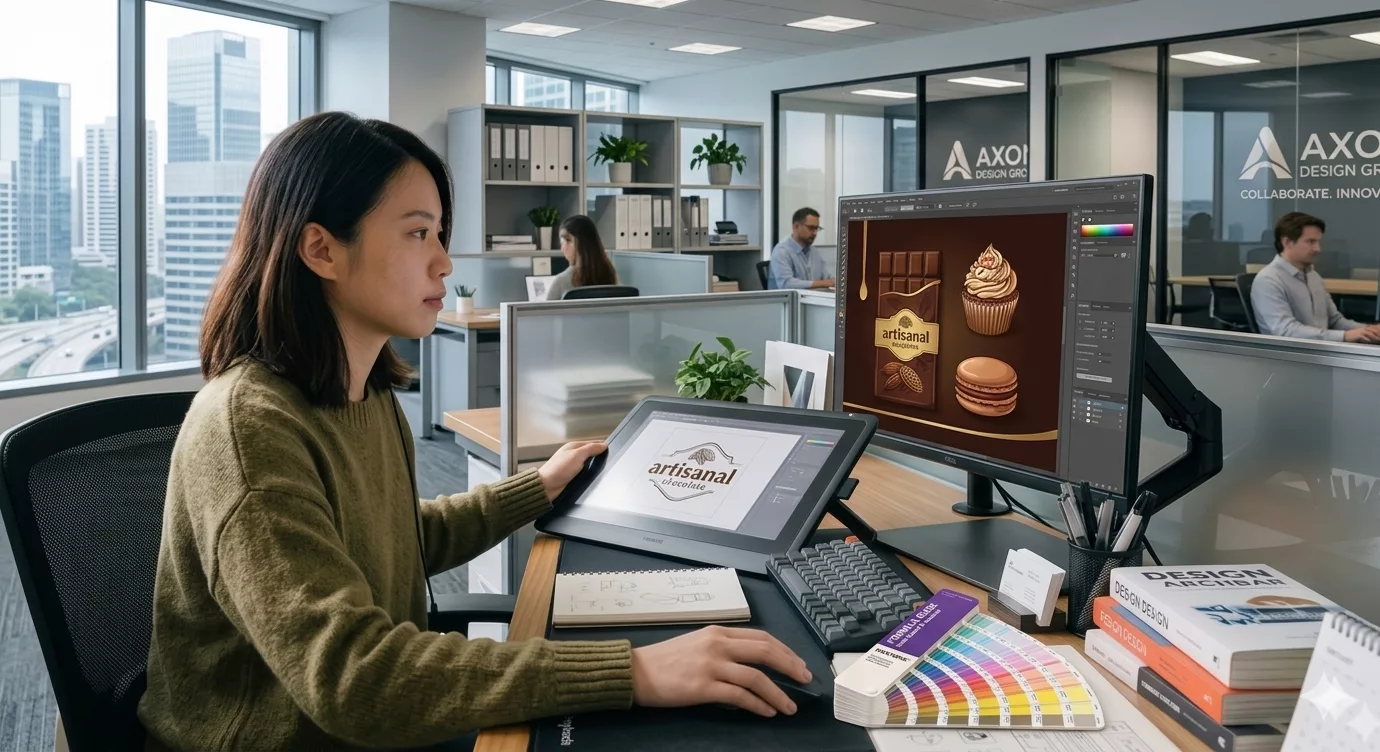
“Consistent quality begins with inspection records at every production stage.”
We translate product, material, printing, and sealing requirements into production-ready specifications.
We select PE, PP, NY, PET, aluminum foil, or paper according to shelf-life, barrier, temperature, display, and cost requirements.
Artwork, color samples, and print registration are reviewed in advance to minimize production color variation.
We control laminate bond strength, slit dimensions, sealing, and appearance quality.
We assess solvent-free lamination, mono-material structures, PCR/PIR content, and lower-carbon materials.
Providing contents, dimensions, materials, printing, quantity, and finishing requirements helps us quote more efficiently.
Choose tear notches, hang holes, handles, zippers, or self-adhesive features to meet opening, display, tamper-evidence, and transport needs.
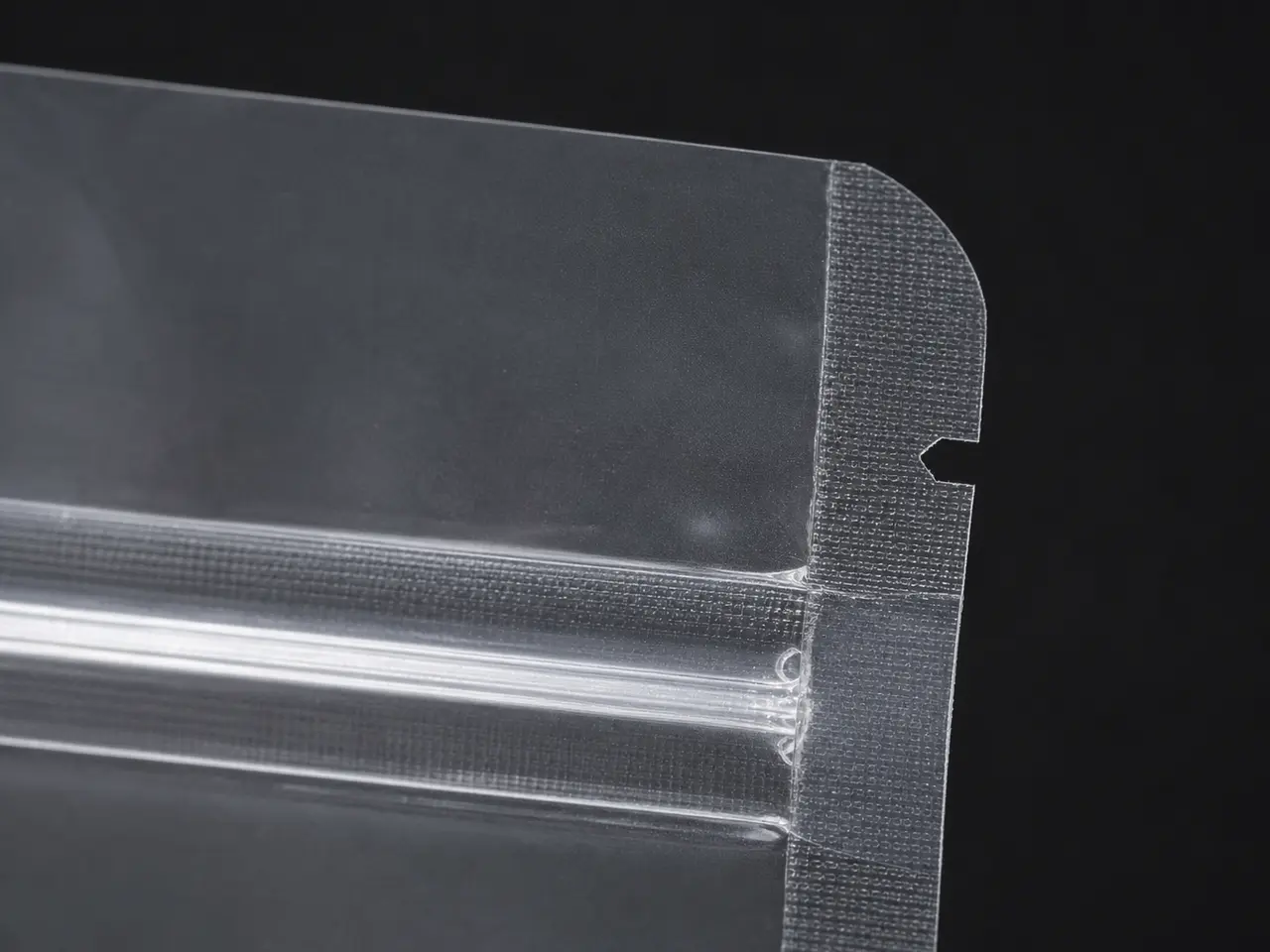
A precise notch at the seal edge enables quick, tool-free opening for snacks, frozen products, and household goods.
Laser scoring creates a controlled tear path for cleaner opening and a lower risk of tearing off course or spilling the contents.
Rounded corners reduce sharp edges, pouch-to-pouch abrasion, and the risk of puncturing outer cartons during transport.
Choose a Euro slot or round hang hole based on product weight and retail hooks for neat display without sacrificing front-panel space.
A die-cut handle in the reinforced seal area makes rice, pet-food, and other heavier packs easier to carry.
A press-to-close zipper keeps the pouch resealable after opening for foods, pet products, and household goods used over time.
A flap with a self-adhesive strip enables fast sealing after the release liner is removed, ideal for apparel, stationery, and e-commerce shipping.
A single-use tamper-evident adhesive leaves a permanent opening mark for confidential documents, logistics, and security applications.
The product contents determine moisture, light, temperature, puncture, and barrier requirements.
The pouch format affects retail display, sealing, filling efficiency, and unit cost.
The material structure and finishing features must be evaluated together.
The number of colors and designs, together with order volume, affects cylinder making, MOQ, and lead time.
Confirm the product contents, pouch format, dimensions, quantity, and use conditions.
Recommend a suitable structure based on storage, display, sealing, and finishing needs.
Confirm the number of print colors, artwork layouts, cylinder requirements, MOQ, and lead time.
After artwork approval, schedule printing, lamination, pouch converting, and pre-shipment inspection.
Yes. Start by sharing the product contents, storage method, and preferred pouch format.
Yes. We can make an initial assessment from a sample, photo, or sketch and finalize the dimensions before production.
Yes. The MOQ varies with the pouch format, dimensions, materials, printing, and finishing requirements.
Colors are approved against the artwork, color samples, and brand standards, followed by artwork and first-article approval before production.
We can assess these uses. Microwave packaging must avoid metallic layers and use an appropriate venting design.
Prepare the product contents, dimensions, required materials or functions, printing, quantity, and target delivery date.
For faster evaluation, provide the pouch format, material, dimensions, thickness, printing, quantity, and intended use.
You can also contact us directly +886-2-22670021 bags.fz1624@msa.hinet.net No. 32, Yongping St., Tucheng Dist., New Taipei City, Taiwan